Get in touch today to request a quote:

FAQs: Marine safety equipment basics
Back to news

FAQs: Marine safety equipment basics

Marine safety equipment compliance is a complex area: it's not just about having the right equipment on board, but also conforming to the requirements of various regulatory frameworks, including international and national regulations, flag state requirements, and classification society standards. Here, Star answers some FAQs...

Q: What are the regulations around marine safety equipment?

A: Marine safety equipment must often be certified by recognised authorities, and vessels must undergo regular inspections to ensure compliance. There are multiple layers of regulation in the marine industry – and it’s vital for vessels to comply with both international and local standards to ensure safe and legal operation. This includes the IMO, flag states, and classification societies.

The International Maritime Organisation (IMO)

The International Maritime Organisation (IMO) sets global standards through conventions such as SOLAS (Safety of Life at Sea), which provides comprehensive requirements for marine safety equipment. National authorities enforce these regulations within their jurisdictions, often adding country-specific requirements.

Different classes of vessels

Regulations can vary significantly based on the type and size of the vessel. Commercial ships, fishing vessels, and recreational boats all have different safety equipment requirements. For instance, a large cargo ship will have more stringent and comprehensive safety equipment requirements compared to a small fishing boat.

Classification societies

Classification societies, such as Lloyd’s Register (LR), Det Norske Veritas (DNV), and Bureau Veritas (BV), establish and maintain technical standards for the construction and operation of ships. Each society has its own rules, and they conduct regular surveys and inspections to ensure compliance with their standards. Unlike flag states (see below), classification societies focus on the technical integrity and safety of the vessel’s structure and systems.

Flag state requirements

A vessel’s flag state – the country under whose laws it is registered – plays a critical role in determining its regulatory obligations. Each flag state has its own set of regulations that vessels must comply with. For example, a ship registered under the flag of the Bahamas must adhere to the Bahamas Maritime Authority regulations, which may differ from those of other flag states like Liberia or the Marshall Islands. Flag state requirements encompass equipment standards, inspection regimes, and certification processes.
When it comes to onboard safety, even the most experienced vessel operators have questions. From service intervals and regulatory differences to signage, storage, and expiry dates – there’s a lot to keep track of.

The  landscape is dynamic, with frequent updates to reflect new safety findings, technological advancements, and lessons learned from past incidents. If you’re a marine professional with responsibility for the safety of passengers and/or crew, you need to ensure your equipment, systems and procedures remain compliant.

This involves understanding the certification processes and maintaining proper documentation. Regular training and drills are also essential to ensure crew members are prepared to use the equipment effectively in emergencies.

This quick guide answers some of the most common questions we’re asked at Star International when it comes to marine safety equipment and compliance. Whether you manage a workboat, ferry, offshore platform or cargo ship, these essentials apply across the board.

Q: What is considered essential marine safety equipment?

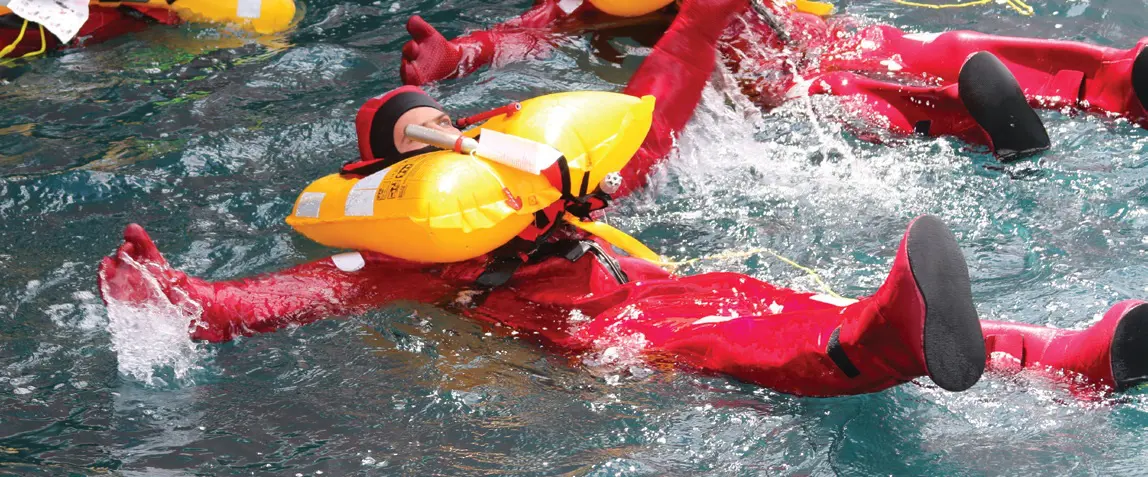
A: Marine safety equipment covers everything designed to protect life at sea in an emergency. This includes lifejackets, lifebuoys, immersion suits, EPIRBs (Emergency Position Indicating Radio Beacons), SARTs (Search and Rescue Transponders), safety signage, pyrotechnics, and more. The exact requirements depend on your vessel type, flag state, and classification society.

The Merchant Shipping (Life-Saving Appliances and Arrangements) Regulations contain guidance on the legal requirements for onboard life-saving appliances (LSA), under SOLAS.

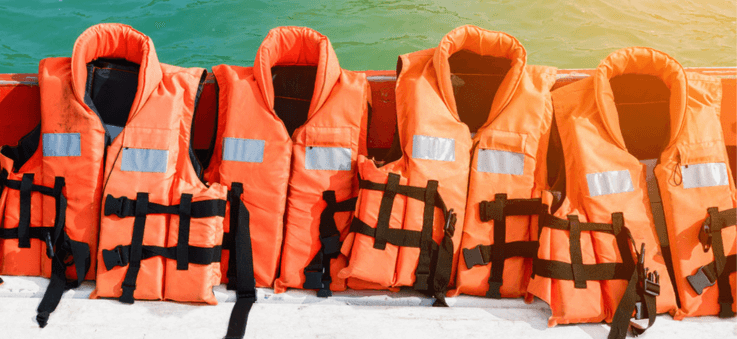
Q: How do I choose the right life jackets?

A: Choosing the right life jackets involves considering the type of water activity, the water conditions you’ll be facing, and the user’s size and weight. Ensure the life jacket is approved by the relevant maritime authority in your country, fits snugly but comfortably, and is suitable for the wearer’s age and weight. There are also specific designs for activities like fishing, water skiing, or paddling.

Q: Do lifejackets expire?

A:Yes. Even if they look fine, the components inside – such as CO₂ cylinders, auto-inflation mechanisms, and lights – degrade over time. SOLAS-approved lifejackets must be regularly inspected and serviced at an approved service station, typically every 12 months.

Q: What is the required number of lifejackets onboard?

A: At minimum, SOLAS requires one lifejacket per person onboard – plus extras for watchkeepers, rescue boats, MES stations, and lifeboats. Your Safety Equipment Certificate will confirm the required number for your specific vessel.

Q: What’s the difference between SOLAS and CE-marked lifejackets?

A: SOLAS lifejackets are internationally approved for commercial maritime use and meet strict IMO standards. CE-marked jackets are usually intended for leisure or inland use and may not meet commercial requirements.

Q: Do safety signs expire?

A: Not officially, but they must remain clear, legible, and compliant with current IMO standards. Faded, damaged, or missing signs may be flagged during inspection and should be replaced promptly.

Q: Are fire extinguishers mandatory on all vessels?

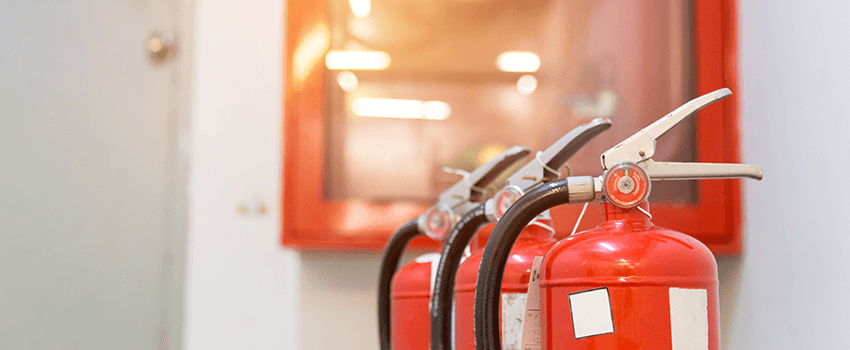
A: The requirement for onboard fire extinguishers varies by country and the size and type of vessel, as well as the nature of your business and the hazards you have identified in your risk assessments. You must have at least the minimum number and type that are legally required. Find more information on the legal requirements for small and large ships in the Merchant Shipping (Fire Protection) Regulations.

fire extinguishers

Q: What types of visual distress signals are required?

A: Again, this depends on where you are operating. In many areas, those operating in coastal waters, territorial seas, and connected bodies of water that are navigable must carry approved visual distress signals. These can include pyrotechnic devices (flares) or non-pyrotechnic devices (flags, electric distress lights). Always check local regulations. For further guidance, see this Marine Information Note from the MCA.

Q: Can I replace expired pyrotechnics myself?

A: You can purchase and install new pyrotechnics (such as flares), but disposal of expired units must be done safely and in line with MARPOL and local port regulations. Star International can advise on both sourcing and safe disposal.

Q: Is a sound-producing device always required?

A: Yes, virtually all vessels are required to have some form of sound-producing device, such as a horn, or whistle, to signal intentions or positions in fog, during meeting or passing situations, and to signal distress. Requirements can vary, so it’s essential to check the regulations applicable to your area.

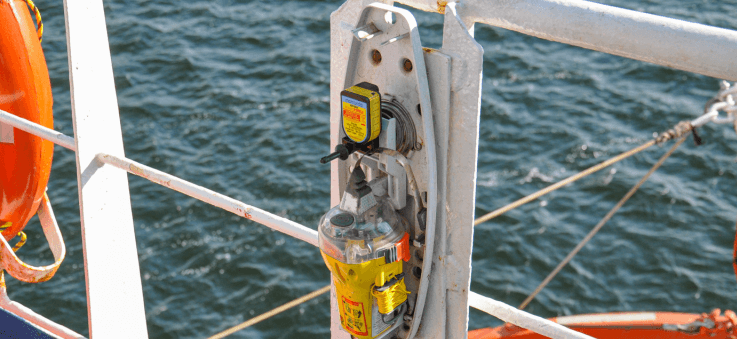
Q: What is an EPIRB, and do I need one?

A: An Emergency Position-Indicating Radio Beacon (EPIRB) is a device designed to transmit a distress signal if you get into trouble on the water. It’s highly recommended for offshore and remote area vessels. While not mandatory for all vessels, having an EPIRB can significantly increase your safety and rescue chances in an emergency.

Q: Can mobile phones replace marine radios for emergency communication?

A: While mobile phones are valuable communication tools, they should not replace marine radios. Marine VHF radios are more reliable in the marine environment, especially for summoning emergency assistance. They can broadcast a distress signal to all vessels and rescue services in range, increasing the chance of a quick rescue.

Q: What’s the difference between a marine evacuation system (MES) and a liferaft?

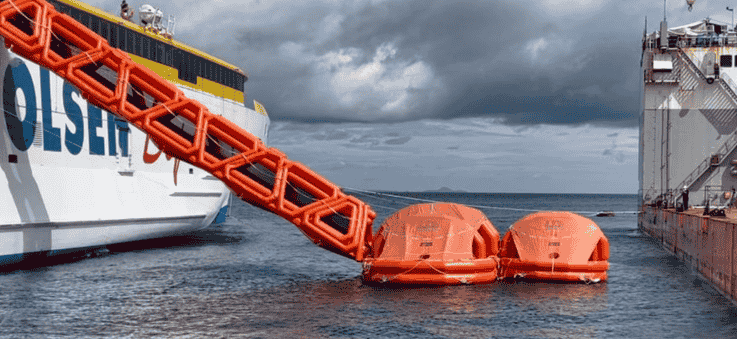
A. Liferafts are a component of marine evacuation systems (MES), but the two are not identical. Liferafts are integral to marine evacuation systems, but an MES refers to the entire rapid evacuation setup, including chutes/slides, deployment systems, and liferafts. Liferafts, on the other hand, can function independently as part of a vessel’s life-saving appliances (LSA).

Marine evacuation systems (MES): An MES is a comprehensive system designed to enable the rapid, safe evacuation of passengers and crew from a vessel during an emergency. It typically includes:

  • Inflatable chutes or slides: For quick deployment and passenger descent.
  • Liferafts: These are attached to the MES and are where passengers board after descending the chute or slide.
  • Storage and deployment mechanism: The system ensures liferafts deploy quickly and inflate properly.

Liferafts: Liferafts, on their own, are standalone life-saving appliances that can be launched manually or automatically. They provide emergency flotation and protection for crew and passengers but are often part of the larger MES when installed on ships with a high passenger capacity, like ferries or cruise ships.

Q: How often should marine safety equipment be inspected or replaced?

A: Inspection and replacement schedules vary by equipment type. Life jackets should be checked/serviced annually as per manufacturers and/or SOLAS regulations. They should also be checked before use. Fire extinguishers must be inspected annually and replaced as per the manufacturer’s instructions, and flares have an expiration date typically of 42 months after manufacture. Regularly inspect all equipment to ensure it’s in good working order.

Marine Evacuation Systems (MES) should be serviced every 12 months, in line with SOLAS regulations. In addition to annual servicing, each MES should be deployed from the vessel on a rotational basis at least once every six years.

Q: How can I stay updated on marine safety equipment regulations?

A: Stay updated on marine safety equipment regulations by regularly checking the website of your country’s maritime authority, and subscribing to relevant maritime safety newsletters or bulletins. These resources will provide the most current information on safety requirements and best practices.

This article aims to cover the basic aspects of marine safety equipment, and is intended for general guidance only. We recommend that you seek expert advice for your specific needs.

We supply, inspect and service marine safety equipment and life-saving appliances, including harnesses and fall arrests; pilot and embarkation ladders, lifejackets, lifebuoys, and survival suits & floatation garments. Interested in finding out more? Please get in touch – we’d love to hear from you.

Need some help?

Get in touch today to request a quote.

"*" indicates required fields