
Get in touch today to request a quote:

Life jacket checks onboard: what operators need to know before servicing is due
Back to news

Life jacket checks onboard: what operators need to know before servicing is due

Safety-critical equipment is often judged by appearance and paperwork alone — a habit that can be costly when it comes to life jackets.

A life jacket can appear fine at first glance in the locker and still have faults that only show up once it is opened at an approved service facility.

That is the problem our technicians see regularly: equipment that looks orderly from the outside, but has corrosion, expired components, poor packing or damage hidden inside.

The service date may still appear valid. The bag may be neatly stowed. Nothing may look obviously wrong. But life jackets are not just items in storage. They are safety-critical equipment, and when someone needs one, it has to work immediately.

That is why onboard responsibility and authorised servicing need to work together. Basic checks help crews spot obvious problems before equipment is needed. Proper servicing confirms whether the life jacket is safe, functional, compliant and correctly assembled.

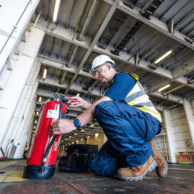
The faults found during life jacket servicing are often routine rather than dramatic.

Corrosion on CO₂ cylinders can develop unnoticed, particularly where jackets have been stored in damp or saline conditions. Lights, salt-bobbins and other components can pass their own service or expiry dates, which may be missed if only the main jacket service label is checked.

Webbing, stitching and retro-reflective tape can degrade through UV exposure, wear, chafing or poor storage. That matters because a life jacket does not only need to inflate. It also needs to hold pressure, remain secure on the wearer and help the wearer be seen.

Bladder faults are another issue. A jacket can look acceptable when folded, but still have a slow leak that would not be picked up by a visual check alone. During proper servicing, the bladder is inflated and monitored over the required period, or in accordance with OEM guidance, to confirm that it holds pressure.

These are the kinds of problems that can be missed if the only check is a quick look at the outside of the jacket.

Onboard checks still have an important place. They help catch visible problems before equipment is needed.

Crew can identify obvious issues such as damaged fabric, broken buckles, missing parts, visible contamination, worn straps, poor stowage or signs that a jacket has been stored wet. They can also remove any suspect life jacket from service so it can be assessed properly.

The important point is where those checks stop.

Opening, repacking, replacing components, checking activation mechanisms, testing the bladder and confirming the correct parts have been fitted are service-level tasks. They need the right training, parts, documentation and controlled procedures.

When that line is blurred, well-intentioned work can create problems that only show up later, often at the worst possible time.

Poor storage is one of the most common ways life jackets are damaged between service intervals.

Damp lockers, salt exposure, poor ventilation, repeated creasing, heavy items stored on top of jackets, oil or fuel contamination and stowage while wet can all affect the equipment over time. Some of that damage may be visible. Some may only become clear when the jacket is opened and inspected properly.

Good storage will not replace authorised servicing, but it can reduce avoidable damage and help life jackets remain in better condition throughout their service life.

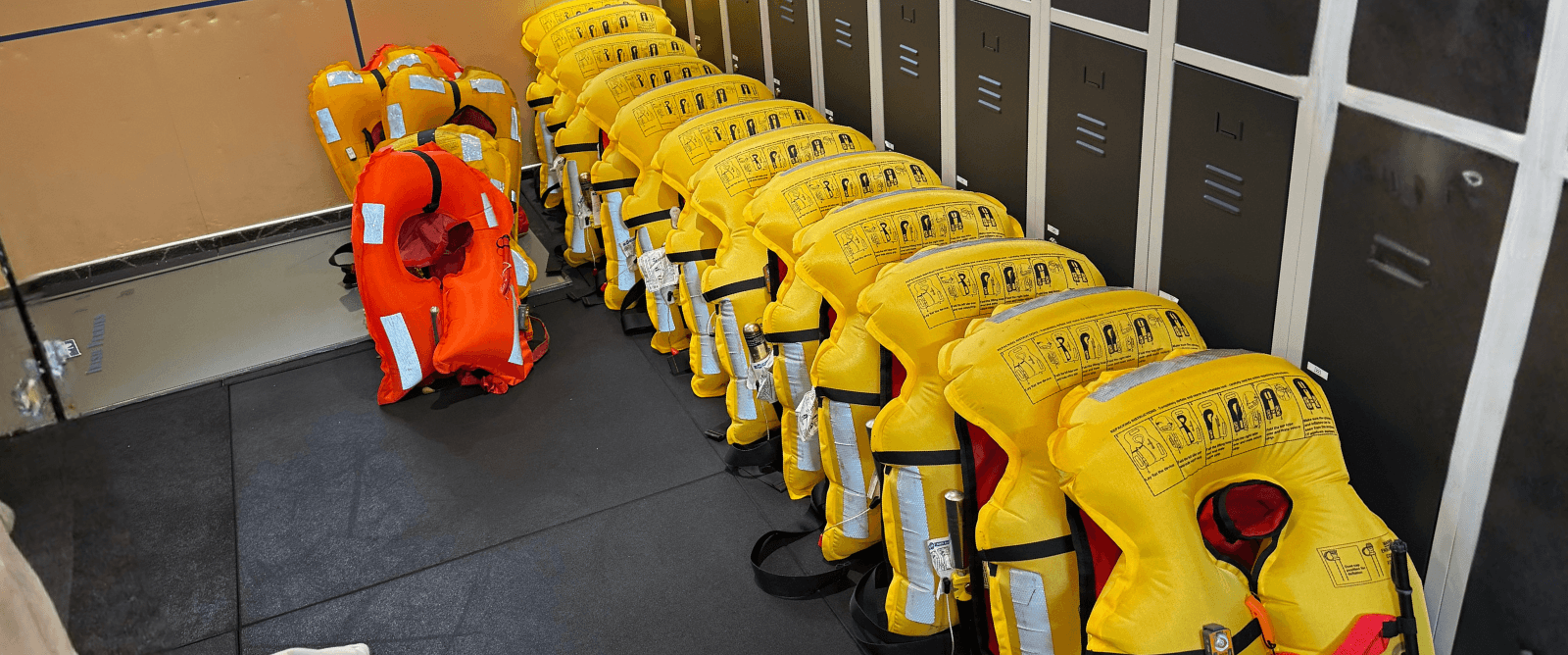
For marine operators, this is a practical onboard issue. Life jackets should be accessible, dry, clean, correctly stowed and protected from conditions that could accelerate deterioration.

The service tag is not the whole story

For vessel operators, procurement teams and fleet managers, the question is not simply whether a life jacket has a valid service date.

The more useful question is what sits behind that date.

Was the work carried out by technicians trained and authorised on that specific equipment? Were the parts genuine and traceable? Are the service records complete, with serial numbers, dates and any faults or parts replaced properly documented? Would the paperwork stand up during survey, audit or Port State Control inspection?

Those details are not always visible in a quotation, but they matter in practice. Periodic servicing is required under the relevant SOLAS, class and OEM approvals, but the quality of that servicing still depends on who carries it out.

Life jacket management onboard does not need to become complicated, but the boundaries do need to be clear.

Crew checks help identify obvious problems. Good storage helps protect the equipment between service intervals. Authorised servicing confirms whether the jacket is safe, functional and correctly maintained.

A current service tag is important, but it should not be the only thing operators rely on. The real question is whether the equipment has been looked after properly, stored correctly and serviced by people authorised to work on that specific kit.

Don’t wait for an inspection to find out your life jackets have failed, contact us today to find out more about our expert maintenance services.

Need some help?

Get in touch today to request a quote.

"*" indicates required fields